Skip to content
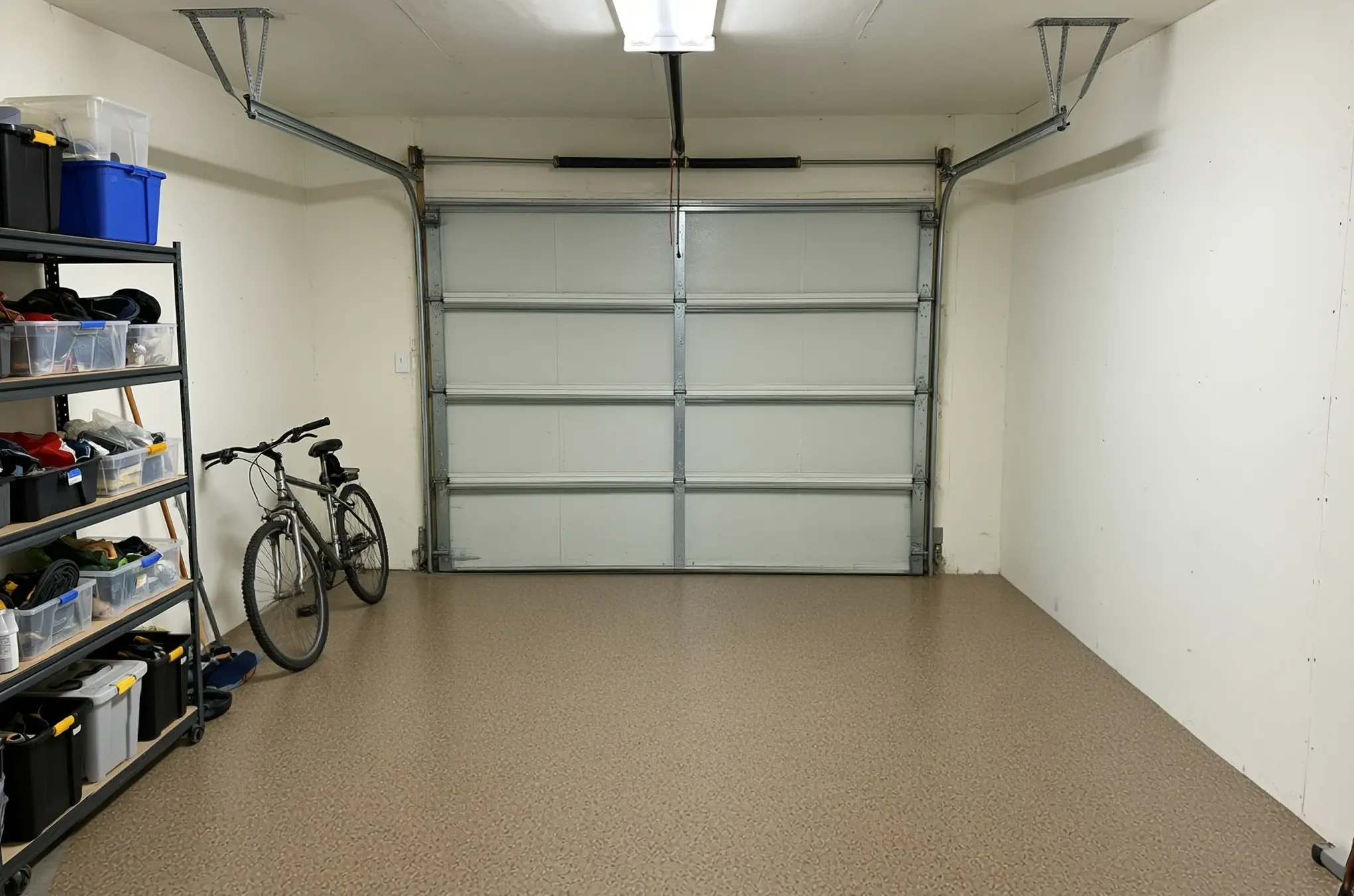
A garage floor finished in ANVIL Ballast

ANVIL finish

Ballast

Pale gray and white carrying a russet fleck. Reads like weathered stone.

What is in the blend

Pale gray and white carrying a russet fleck. Reads like weathered stone.

Broadcast into the wet body coat, then sealed. Order a sample before you commit: a blend reads differently under a garage light than it does on a screen.

Color composition

  • Base resin
  • Flake 1
  • Flake 2
  • Flake 3
  • Flake 4

Rendered from the blend specification. Final appearance varies with lighting, slab texture and your screen — order a sample before committing.

Same system, every blend

The color changes. Nothing else does.

Every ANVIL finish is the same build — the same primer, the same polyaspartic base coat, the same clear. Choosing a blend is choosing what you look at, not what you get.

  1. Clear protective topcoat Anvil Coat ClearTop Takes the abrasion so the flake never does.
  2. Full broadcast flake Anvil Decorative Flake Broadcast to refusal, then scraped flat. Texture, depth and slip resistance.
  3. Pigmented body coat Anvil Coat-AE The body of the system, and what holds the flake.
  4. Primer Anvil Prime Penetrates the slab and creates the bond everything above relies on.
  5. Prepared concrete Diamond ground to profile. This is the step people skip.

Next step

How much of it do you need?

Measure your floor and we will size the system, including the overage that stops a half-finished slab.

Other blends

  • Voltage

    Denim blue struck through with white and black. The boldest blend we make.

  • Rawhide

    Warm cream and taupe with black struck through it. Reads light and warm at a distance.

  • Graphite

    Charcoal and mid gray, close to monotone. The darkest and quietest blend we make.

  • Arc Blue

    White and gray lifted by cobalt blue. Brighter and cooler than Voltage.

  • Ironworks

    Soft light grays, low contrast and no black. The most forgiving on an uneven slab.

  • Bone Yard

    Cream, sand and tan. The warmest and lightest blend we make, and the best at hiding dust.

  • Quarry

    Cream and warm gray with rust and olive worked through. Reads like crushed stone.

  • Millstone

    Pale cool grays, very low contrast. The quietest light floor we make.

  • Workbench

    Sage-gray and warm beige with black struck through it. Reads like a shop floor that gets used.

  • Glacier

    White and pale blue-gray with slate through it. Cool, soft, brightest under shop lighting.

  • Copperhead

    Cream and taupe with black, lifted by scattered rust. Busier up close than it looks across a garage.

  • Chalkline

    Black and white in equal measure. The sharpest contrast we make.

  • Mortar

    White and pale sand, peppered with black. The brightest neutral we make.

  • Kiln

    Grayed taupe-brown lifted with off-white. The warmest quartz we make, and still a neutral.

  • Frost

    Pale cool gray, even and quiet. Bright without being stark.

  • Cinder

    Even mid gray with charcoal through it. The workhorse neutral.

  • Basalt

    Charcoal through and through. The darkest floor in the range.

  • Cobalt

    Bright cerulean blue flecked with white. The only saturated color we make.

  • Sparks

    Mid gray shot through with deep red, like heat coming up in steel.

  • Firebrick

    Deep brick red flecked with white. The boldest floor we make.

  • Whitewash

    Pale gray and white. The brightest floor in the range.

  • Limestone

    Soft pale gray flecked with warm pink and a little sage. Neutral enough to sit under anything, and the best in the range at hiding dust.

  • Granite

    Black and white speckle, high contrast. Reads like polished granite.