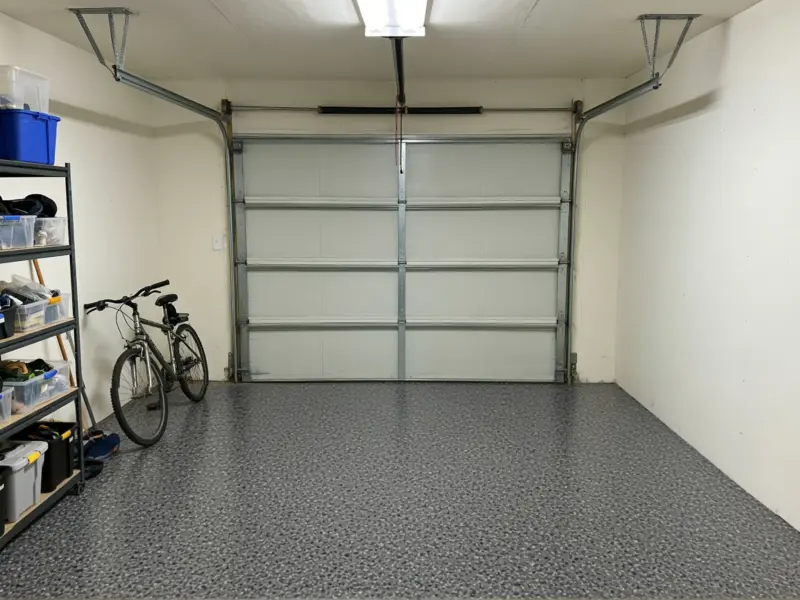
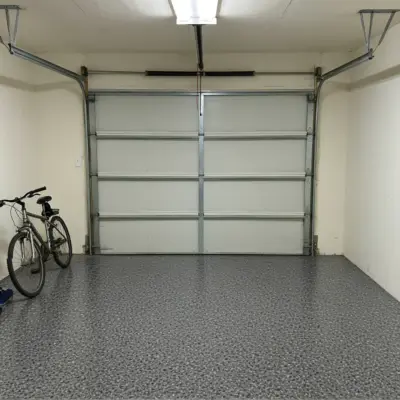
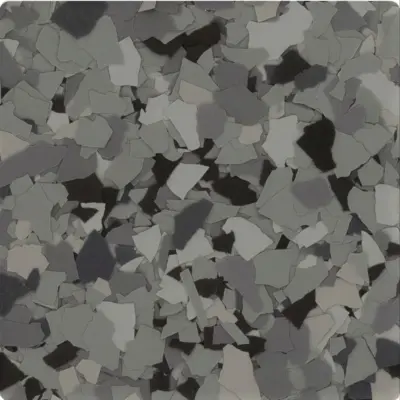
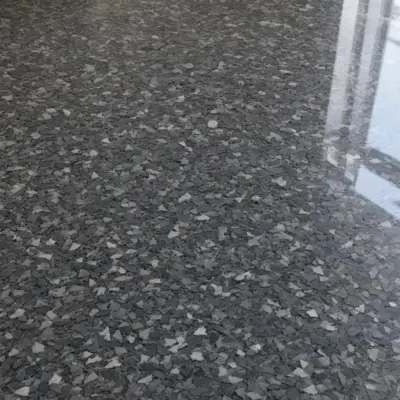
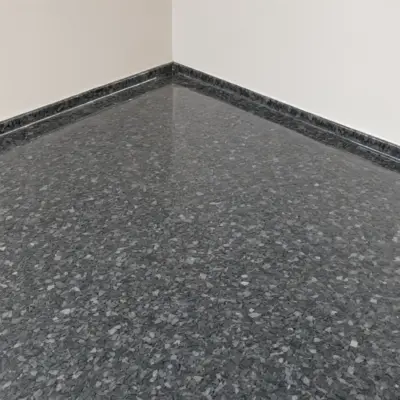
See this finish in your own garage.
Upload one photo of your actual garage and try real ANVIL finishes in your exact space. It takes about a minute — nothing to install, no account needed.
Visualize My FloorAbout this system
-
Built for industrial floors, sold for garages
These are Duromar coatings — the same chemistry specified for plants, workshops and service bays, made by a manufacturer whose day job is industrial flooring. Nothing here was designed down to a consumer price and then dressed up.
-
It outlasts the kits it gets compared to
A polyaspartic system over a properly ground slab is measured in decades, not seasons. The single-part kits sold as weekend projects are typically resurfaced within a few years — not because anybody cut corners, but because one film cannot bond, color and take abrasion at once, and it gives up at whichever job is hardest that summer.
-
It does not amber
The topcoat is a polyaspartic, not an epoxy. Epoxy yellows under UV — that is a property of the chemistry, not a quality problem, and it is why an epoxy-topped floor near a window goes warm and patchy over a few summers. A polyaspartic stays the color you chose.
-
Full broadcast, not a sprinkle
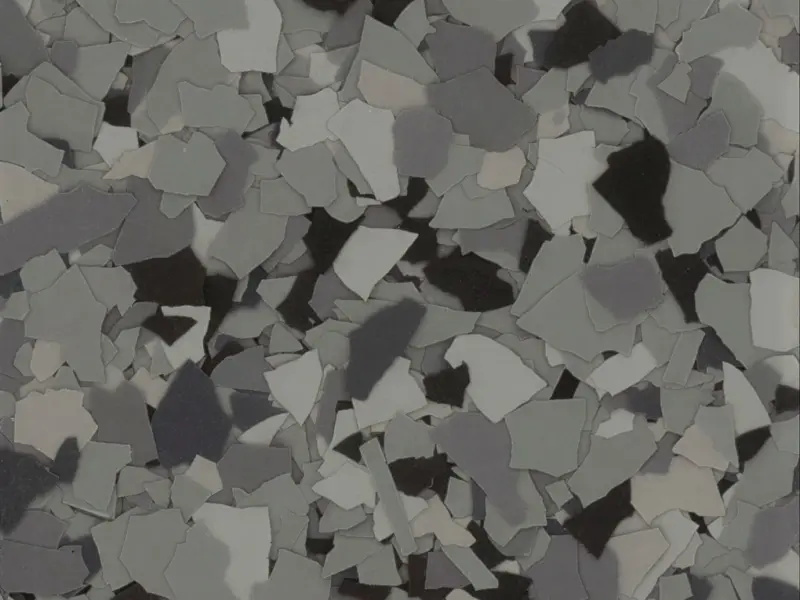
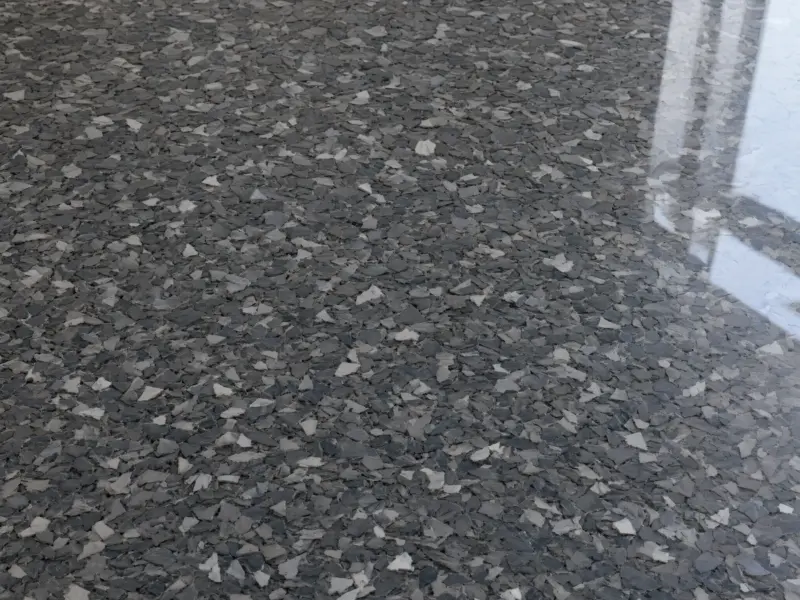
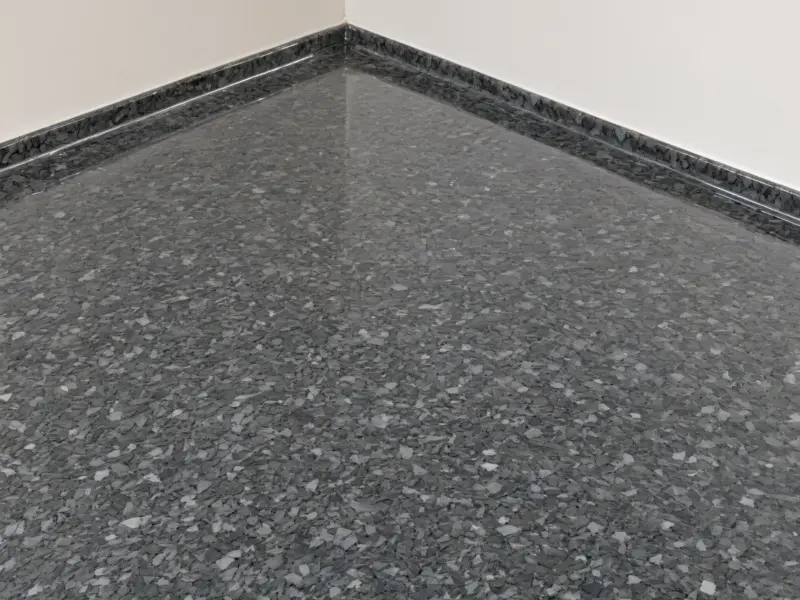
The flake goes down until the floor will not take any more, then gets scraped flat. That is what makes the surface read as one material rather than as chips scattered on a colored base — and it is what hides the dust, the tire marks and the odd dropped spanner.
-
Four layers, each doing one job
A penetrating primer for the bond, a pigmented body coat to carry the flake, the flake itself, and a clear topcoat that takes the abrasion so the flake never does. One-coat products ask a single film to do all four, and it is always the bond that loses.
-
100% solids
Nothing evaporates out of it. The film thickness you apply is the film thickness you keep, which is why the coverage arithmetic on this page can be trusted and why a solvent-thinned product needs more coats to reach the same build.
-
It cures in a cold garage
Down to 55°F, and the topcoat is firm in hours rather than days. An unheated garage in October is exactly where an epoxy stalls and stays tacky.
Enter your floor size above and the exact contents appear here — every pail and every pound of chip, sized to your slab rather than to a box on a shelf.
| Solids content | 100% by weight |
|---|---|
| Primer film thickness | 5 mil nominal |
| Topcoat film thickness | 12 mil nominal |
| Coverage | 100 sq ft per gallon at 16 mil |
| Mix ratio | 2:1 by volume, 2.4:1 by weight |
| Working time once mixed | 20 minutes |
| Firm to walk on | 10 hours |
| Full cure | 120 hours |
| Application conditions | 55°F and above, air at least 5°F above the dew point |
| Condition the kit to | 60–80°F for 48 hours before use |
| Storage range | 50–110°F |
| Shelf life | 12 months |
| Surface preparation | SSPC-SP13, profiled to ICRI CSP 3–5 |
| Packaging | half, one and four gallon units |
These are industrial coatings, and they are safe to install at home with the right protection and a ventilated garage. Here is what that means in practice, before you buy rather than after it arrives.
Everyone in the room needs a respirator
A half-face respirator with organic-vapor cartridges — not a paper dust mask, which does nothing about vapor. Polyaspartic cures through an isocyanate reaction, which is what makes it tough and fast, and it is also the one real health risk in the job. Isocyanate vapor can sensitize the airway, and unlike an irritation that fades, sensitization is permanent. Most people never develop it. The ones who do were usually working without protection in a room that was not moving air.
A professional crew wears one for this as a matter of course. It needs saying here because nobody is handing you the equipment, and a garage with the door half down is a much smaller room than a plant floor.
Also on the list
- Nitrile gloves, not latex, and a spare pair each.
- Sealed eye protection. The body coat irritates skin and eyes, and the person broadcasting flake is throwing material at knee height.
- Cross-ventilation — air needs somewhere to go as well as somewhere to come from. A box fan in the doorway blowing out beats opening the door wider.
- Long sleeves, and clothes you will not wear again.
It is rolled, not sprayed — and that is deliberate
Spraying isocyanates atomizes them, which is a different level of exposure needing supplied-air equipment and training. Laid by hand with a cartridge respirator and real ventilation, this is a job somebody can safely do at home. That is why the system is built to be rolled and squeegeed.
Who should hire it out instead
Anyone with asthma or an existing respiratory condition, and anyone who cannot ventilate the space properly. That is not the end of the floor — buying the coatings and having a local installer lay them is a route we are glad to sell you.
Safety data sheets
Full manufacturer safety data sheets for every component ship with your order, and we will send them before you buy if you want to read them first — get in touch and ask. Nobody should have to guess what is in a product they are about to spend a weekend with.
What you receive
4 products, plus a prepared slab.
- Clear protective topcoat Anvil Coat ClearTop Takes the abrasion so the flake never does.
- Full broadcast flake Anvil Decorative Flake Broadcast to refusal, then scraped flat. Texture, depth and slip resistance.
- Pigmented body coat Anvil Coat-AE The body of the system, and what holds the flake.
- Primer Anvil Prime Penetrates the slab and creates the bond everything above relies on.
- Prepared concrete Diamond ground to profile. This is the step people skip.